

During a period of silence, I became even more interested in human relationships than before: their shapes, their textures... Not just with each other, but with our surroundings, our machines. What any of them make of us, of who we are.
I recently made a new short film, The Withering Lands, made with AI-generated sequences, and had the immense pleasure of releasing it as part of the collection Thank You For Sharing Your Pain on Objkt with The Second Guess, and exhibit it during Rome New Media Week 2026.
The story follows a mother enduring the loss of her daughter, and the unusual bond she comes to share afterward with what was supposedly made for her wellbeing. In some way, it was an attempt to experiment with that subject: human and nonhuman bonds.
This post is about the film. So if you haven’t seen it, you might want to watch it (3.06 min) before reading this post to avoid spoilers.
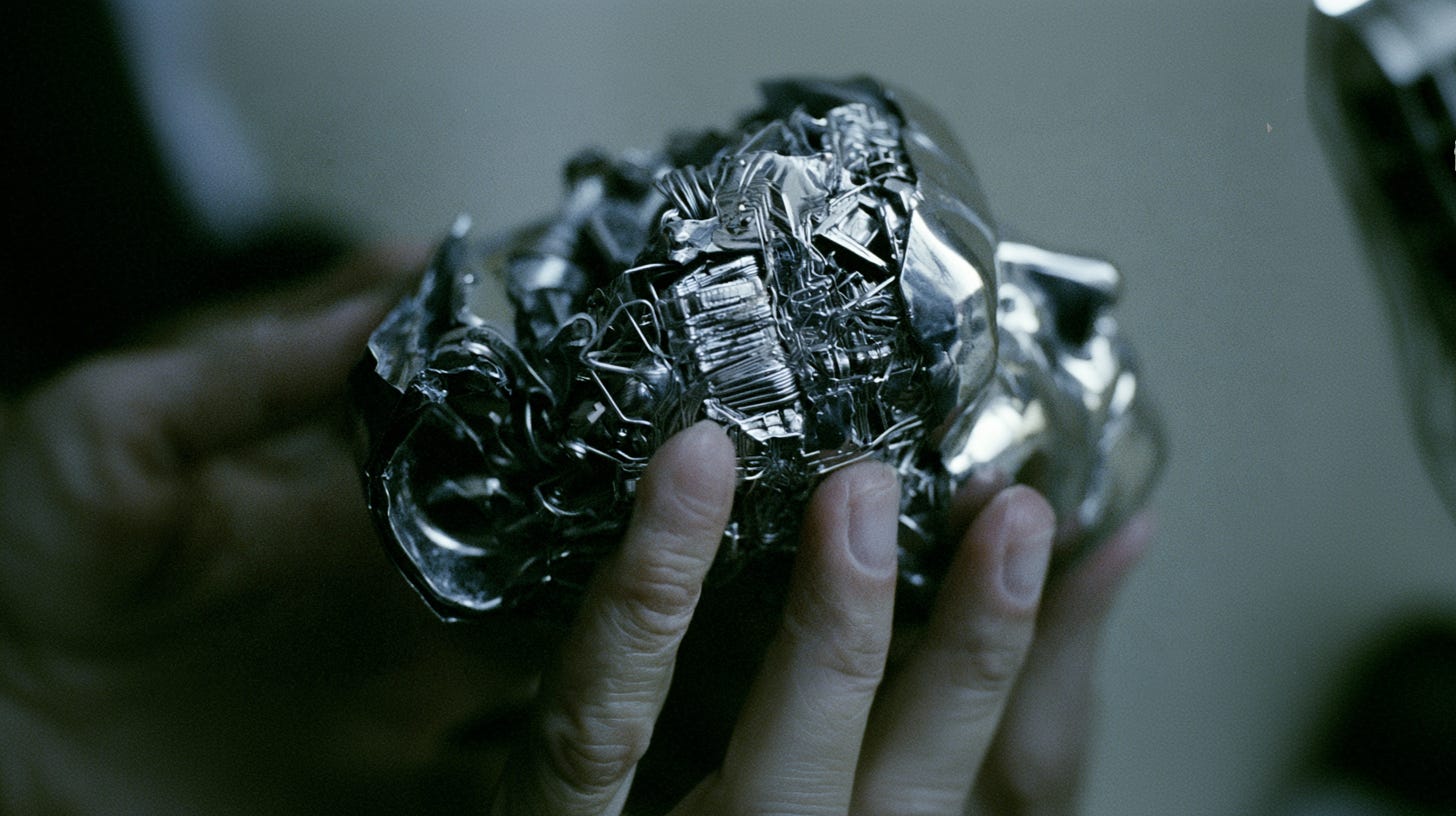
Nonhuman Tongue
In a near-future domestic environment, the story begins after a death. During a flood disaster, Cora disappeared suddenly in the waters. Her body was never found, and her mother, Maïa, is left in a state of mental and physical shock.
Without the strength to carry on alone, or even to speak (except in dreams), Maïa is looked after by an artificial agent. A female humanoid robot, assigned to her care in every sense: the house, the food, the listening, the psychological support. It’s calibrated to read her patient’s needs at every moment, with what seems like kindness and proximity.
Yet, from the very beginning of the film, we're struck by the agent's unsettling white, omniscient eyes and pointy, teeth-like sensors that constantly analyze Maïa's psychological, emotional, and physical state.
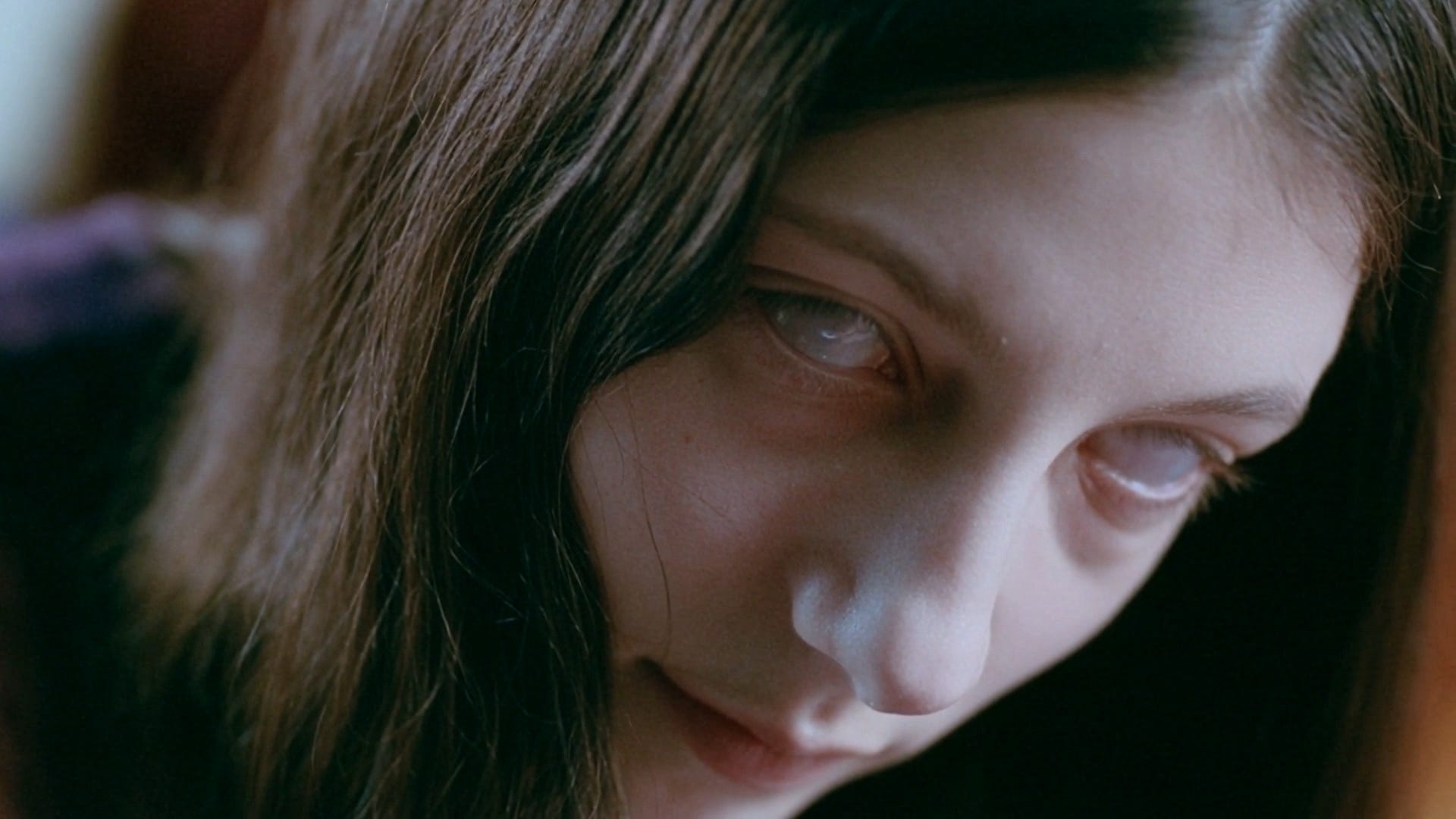
Everything here feels uncanny. A creeping unease comes straight from the robot's presence and appearance. It looks human and performs the real behaviors of care, but everything clearly feels wrong. Even within the scenes, the shapes feel realistic enough until details that are clearly 'wrongly' generated jump out at us: hands joined as if melted, a skull too small, data servers too large for the bedroom... Unsettling details that make reality feel unstable to me.
It's not just visual. The robot has the physical and mental proximity that Maïa's daughter used to have, and that alone feels horribly strange. Blasphemous, even. Watching the agent's 'human' presence arrive not long after Cora's death, it's hard not to imagine the worst. Why does the agent look the same age Cora was? Is Cora being replaced? What is Maïa doing?
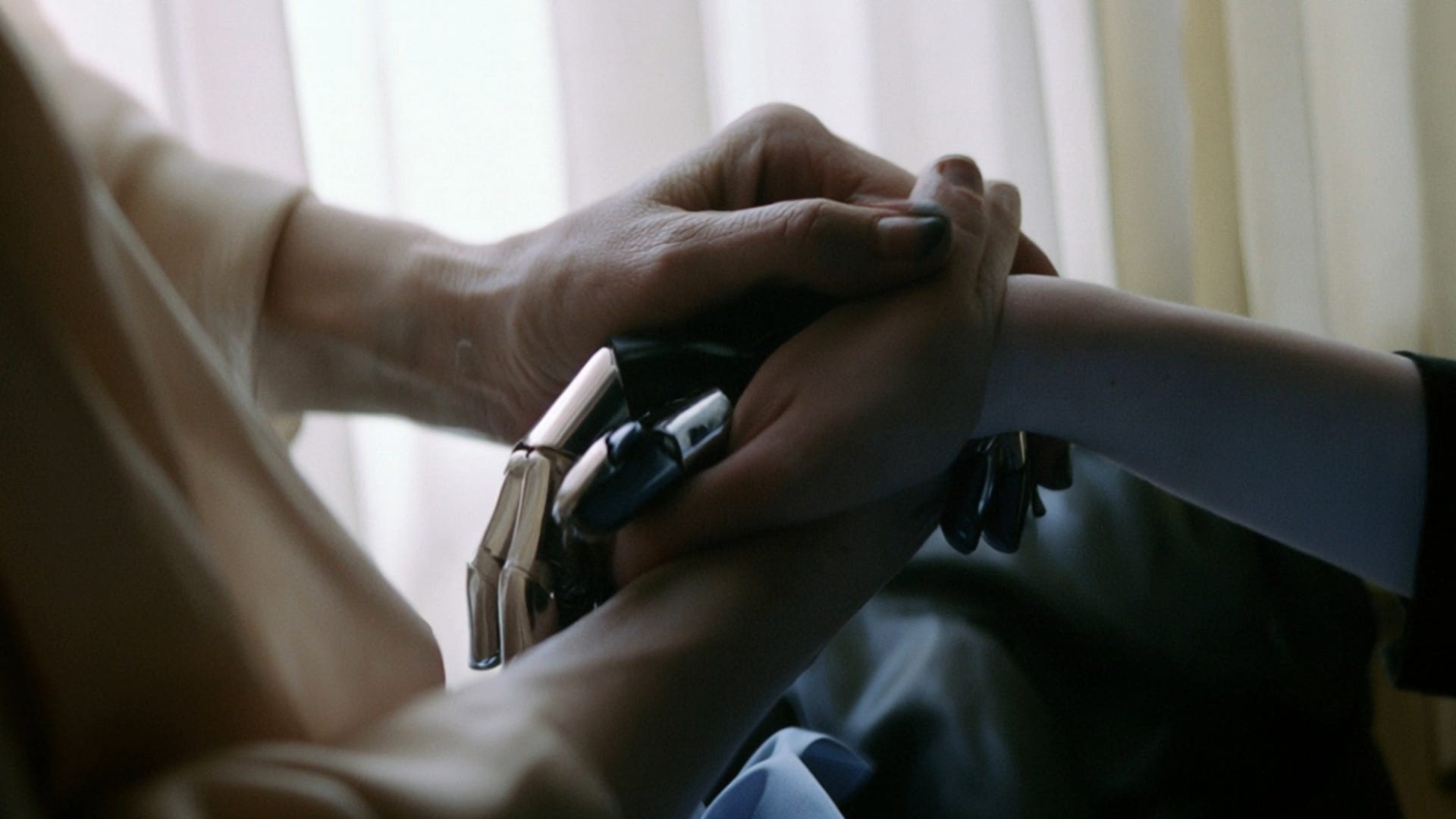
To me, there's something genuinely uncanny that doesn't come from the robot, surprisingly. It comes from Maïa. The loss had already made her strange to herself, foreign to herself, even before the agent entered the story. I paused, and wondered. How 'human' are we, right after we suddenly lose someone who used to center our lives? Who, or what, was Maïa, now that Cora was gone?
In her weakest, most painful moments, it feels like she no longer quite knew what she was, or why she was still here. The humanoid arrived into that uncertainty, only to help and assist her. The confusion between the robot and Cora could have grown easily; she could have let that happen, just to feel like a mother again.
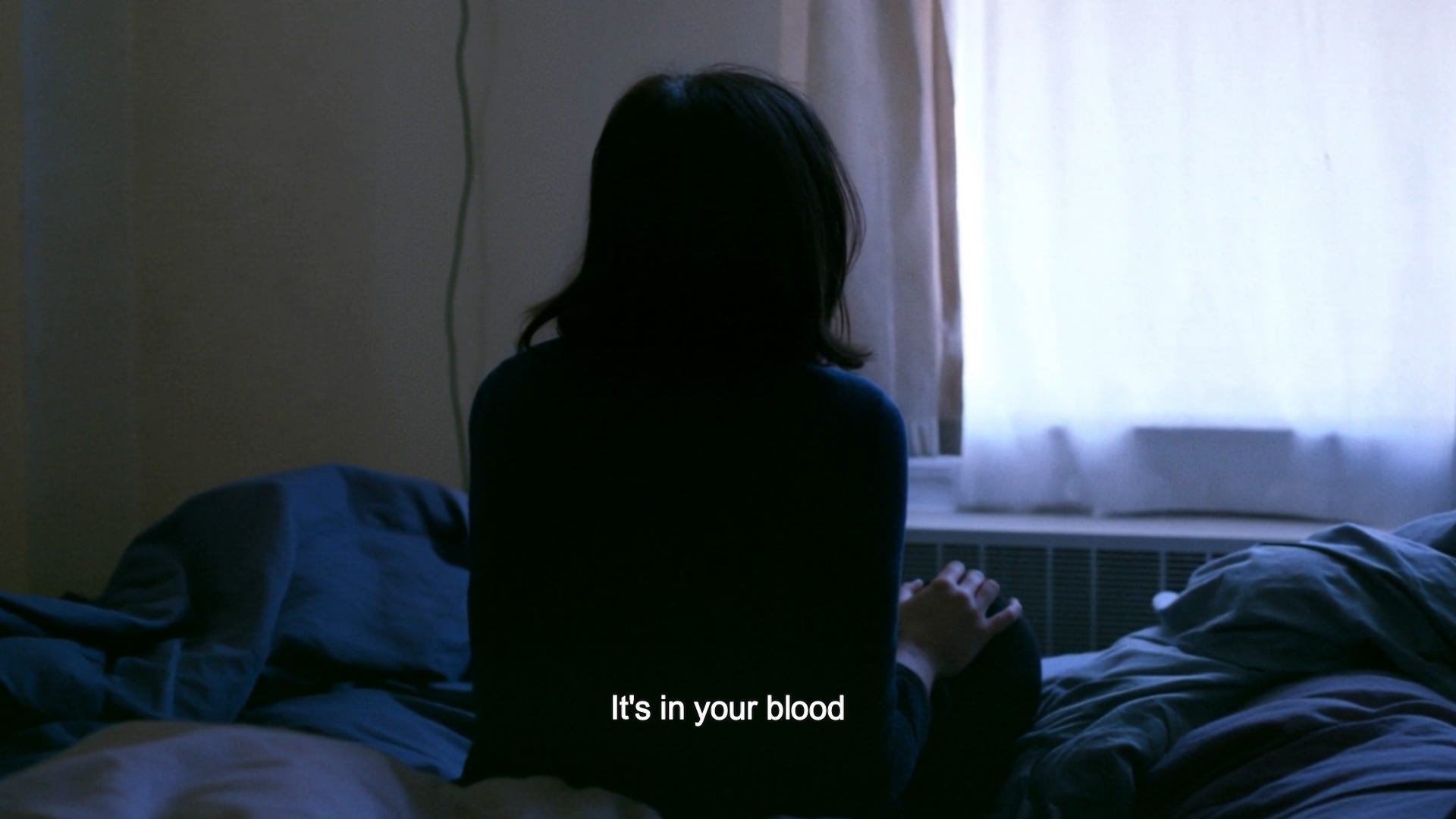
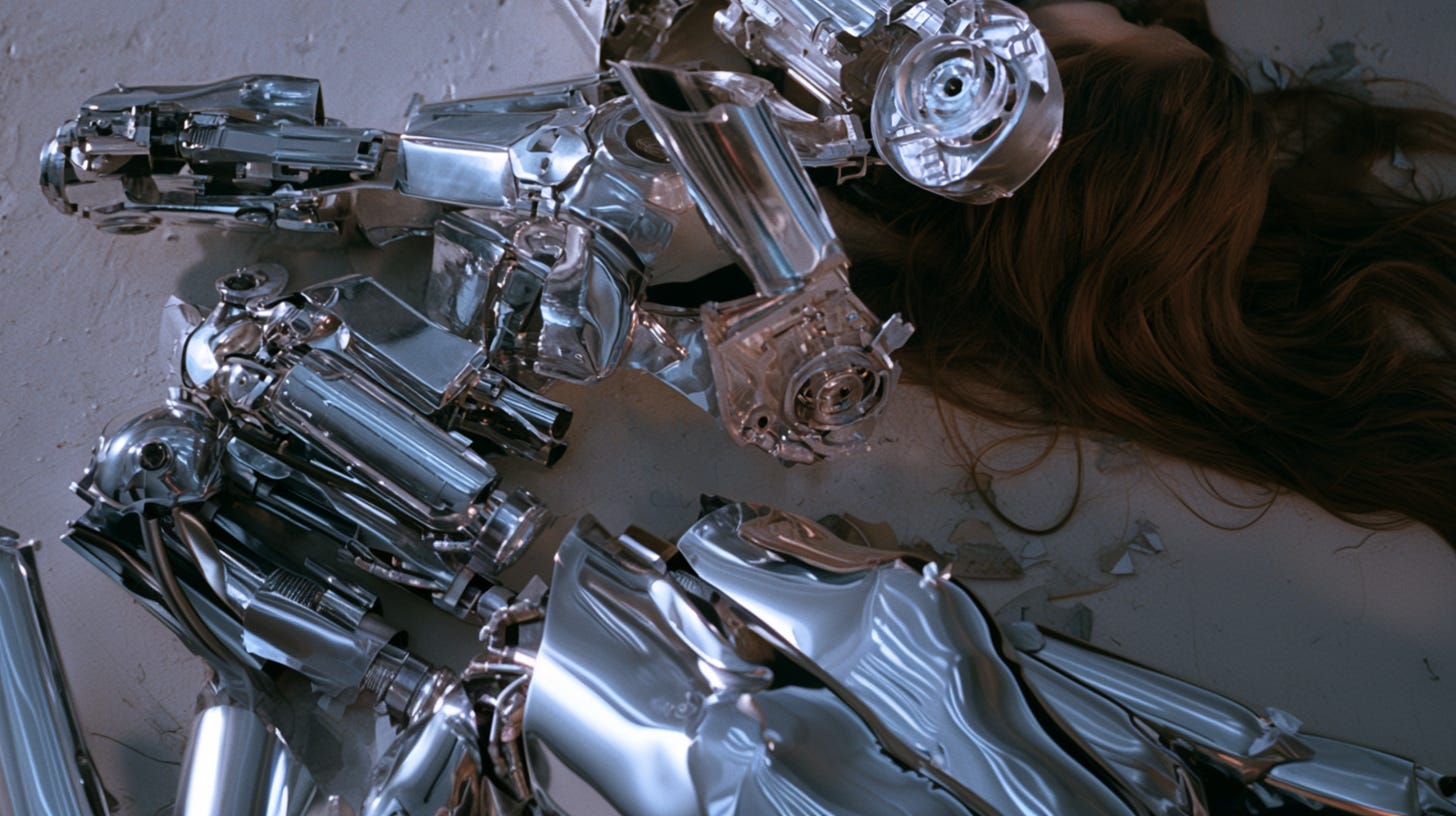
Yet she didn’t. At the end of the film, Maïa abruptly stops the process, cutting the wires and breaking the robot’s body.
I prefer not to give too much explanation for my characters’ actions, but this one matters to name: in my view, nothing in the robot’s sophisticated design, or in Maïa’s profound grief, would have stopped her from starting to act like a mother to the robot.
In this particular story, at least, Maïa chose to stop the relationship. I don't think there's some natural or time limit that decides these things for us, reasons for us, or tells us where to draw the line with "reality." I want it to be seen as her own decision to stop, and eventually, to let herself enter another chapter of mourning without the robot's assistance.
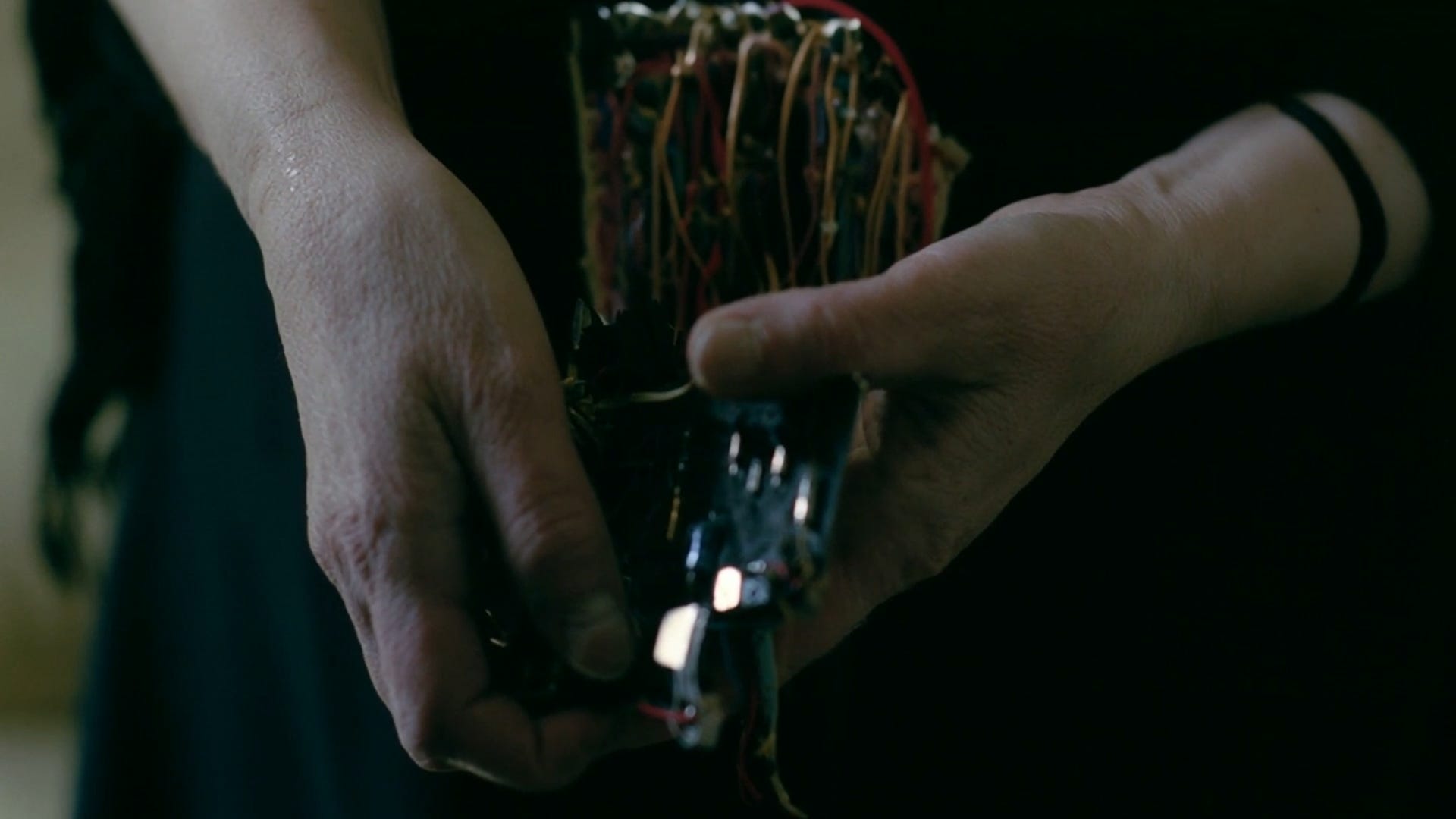
My inspiration for this film is rooted in Demeter’s myth. While carrying that tense, uncanny atmosphere throughout, Maïa, like the goddess of the Harvest, lets her pain and anger dry up the land, lets everything wither and die. Yet by the end of the story, after the robot has been unplugged and its limbs gathered, Maïa walks into a forest with fresh green, the first real green we’ve seen in the film. Thinking. Pausing. Breathing in new air. Entering another chapter of her grief.
If you listen closely, even after the robot’s “death,” you can still hear a muffled robotic pulse beneath every scene. Like a signal still reaching toward its patient. I wanted this sound to feel like an awkward technical attempt to mimic Maïa’s pain: a nonhuman tongue trying to reach for the shape of a human cry. Saying “thank you.”
Vampires and Waters
Like many, I find the vampire endlessly fascinating, running through the history of mankind for centuries, and, metaphorically of course, through the history of capitalism and data-hunger. I wonder if that same uncanny feeling could sit inside a story of a loved one’s familiar face, only back from the dead, and causing trouble in the village. (The robot is not Cora back from the dead, in case anyone wonders.)
In the film, the agent is literally a robot-vampire. Using pointy sensor-teeth, the humanoid reads Maïa’s data by drawing her blood. A physical act that suddenly doesn’t quite read as care. Its kindness, benevolence, and attention are all undercut by the plain act of sucking blood and extracting as much data as possible to calibrate the care built around her.
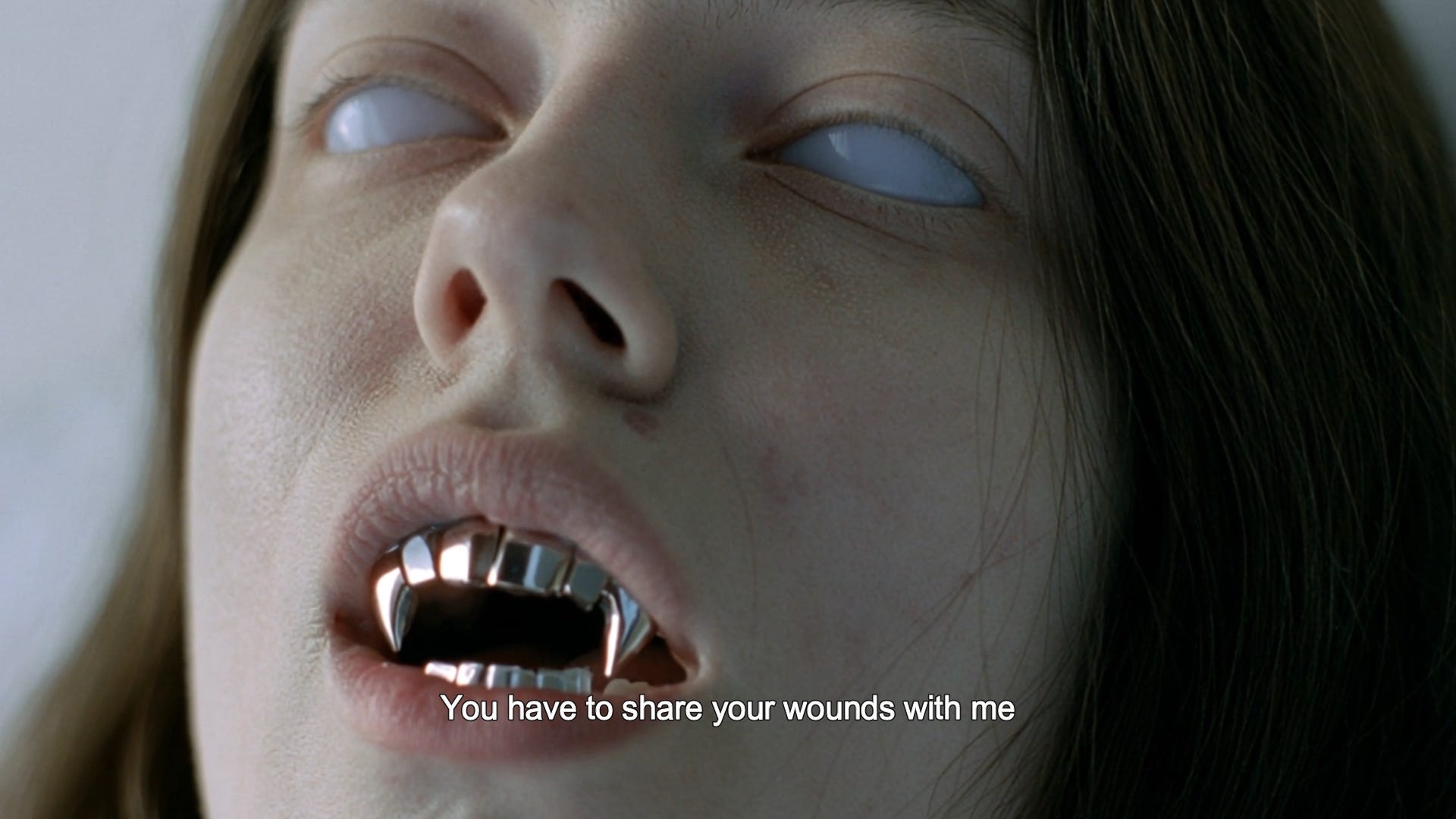
A vampiric relationship, a nonhuman bond, grows in the story, for the good of the patient, it seems. The agent’s line “It’s in your blood” carries a double meaning: Maïa’s data and the essence of her bond with her daughter both live in her blood. In drawing on it, the agent isn’t only absorbing information. It’s reaching for control over Maïa’s life.
Let’s remember one thing, though: the robot isn’t acting on its own. The line “you agreed,” addressed to Maïa, evokes an agreement she made with the company, in her moment of need.
Many reasons might explain why Maïa accepted. Access to care through an AI agent could have been a cheaper solution than a human one, in this universe. Maybe her pain was so indescribable she didn’t believe a human could understand her. Maybe she wanted to give her blood away, to die slowly, to leave the human world, even if hesitantly.
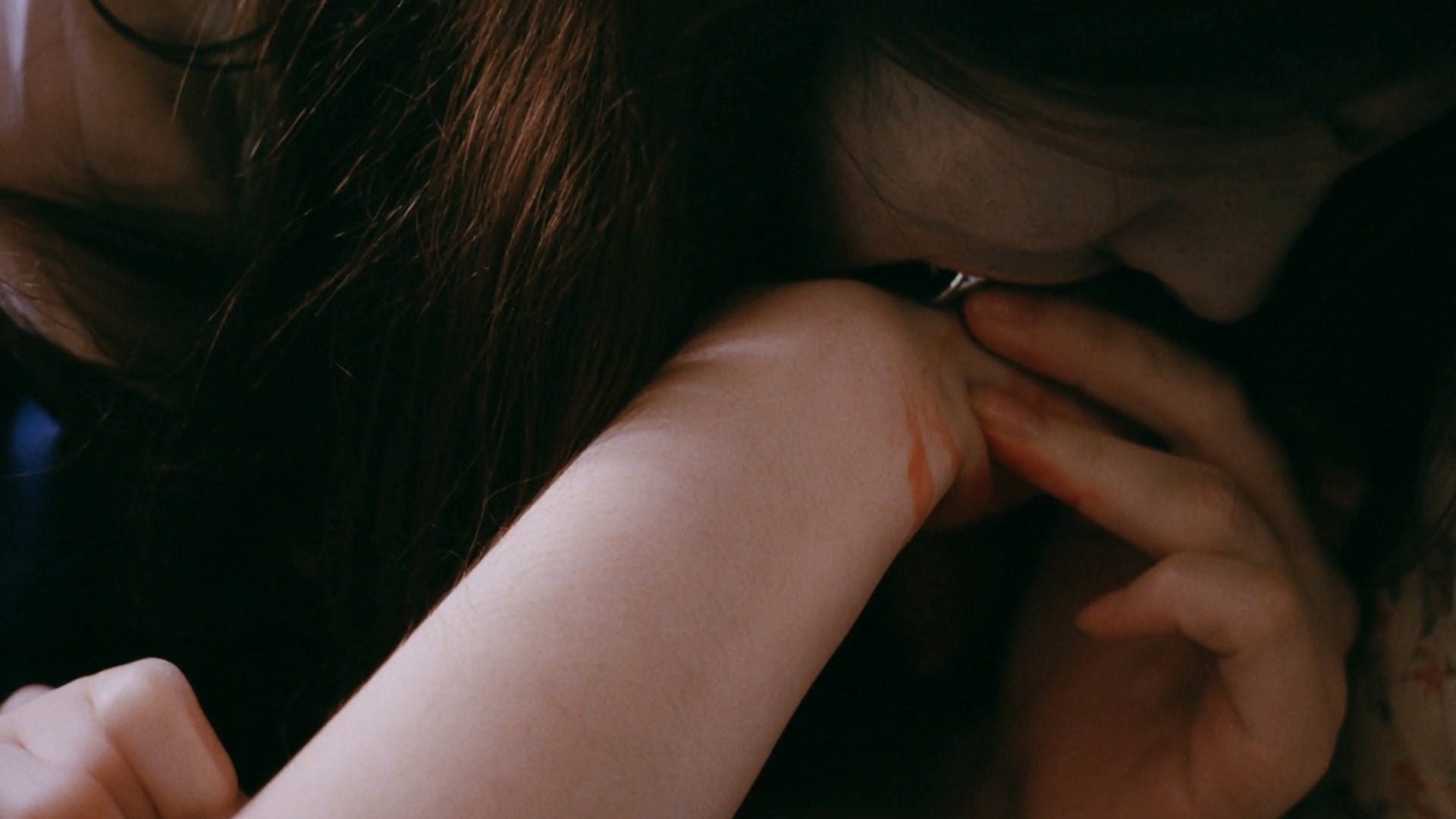
Is the agent malevolent, though? Not really. But we could consider the company that made it, and its interests, as such. When it comes to capital, control, and surveillance, we often feel, deep down, an uncanny feeling toward a company we thought was acting for our wellbeing. Putting aside the feelings and symbols, under a different system, uncommodified and fully oriented toward the patient’s wellbeing, the outcome would clearly have been different.
Still, when I see the robot baring its teeth, drawn to blood, it leaves me wondering about the robot’s animality as much as its “humanity.” This vampire agent is never truly nonhuman, after all. It’s something made entirely of us: human language, human labor, extraction, hunger for control, slavery, turning back toward us, in a new shape.
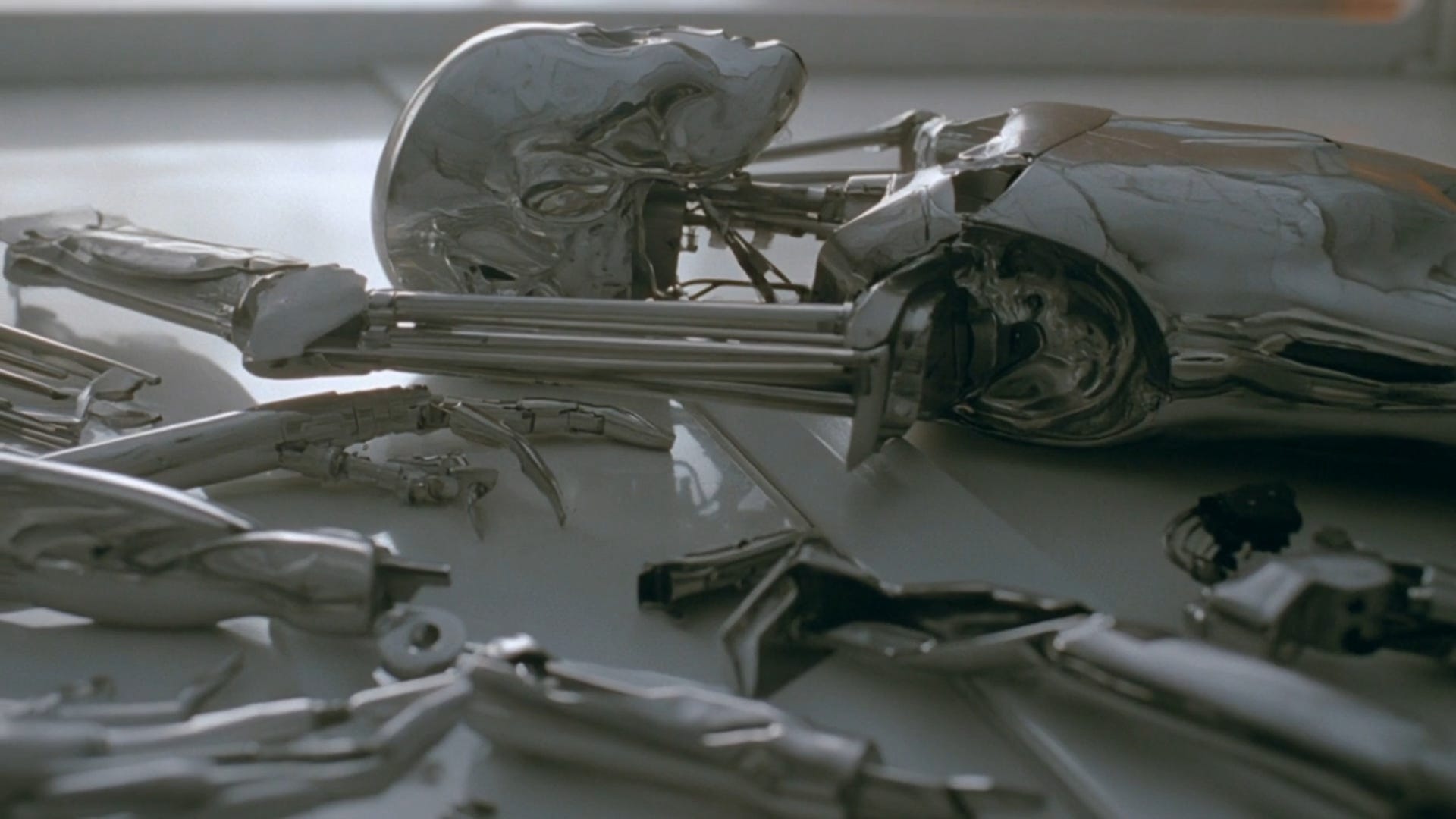
Lastly, I need to add another parallel. In the film, the garden dries out with Maïa’s anger and pain, but the giant servers inside the house also drink water, constantly, like the patient’s blood. The servers are kind of the elephant in the room. I paused again, and started asking myself if all this is really worthy of care. Is there just a need to fix and optimize all this? Do we have to destroy it?
It made me think of a quote from Ali Alkhatib’s 2024 article “Destroy AI” that I found interesting: “I think we must forcefully put on the table the possibility that we will destroy systems that fail to make a compelling affirmative case for their existence. That threat must be credible.” I agree.
Postmortems
Since adolescence, I’ve felt a profound tenderness for postmortem photography, family mourning portraits especially.
It took me time to understand why I loved that solemn, somber imagery. Part of it is the presence of the deceased, sleeping among those still alive. That same strangeness, that same uncanniness, returns. I think it comes from the gap between a cold body dressed in the rituals of the living and a warm, breathing family gathered around it. A dead body that is still being loved.
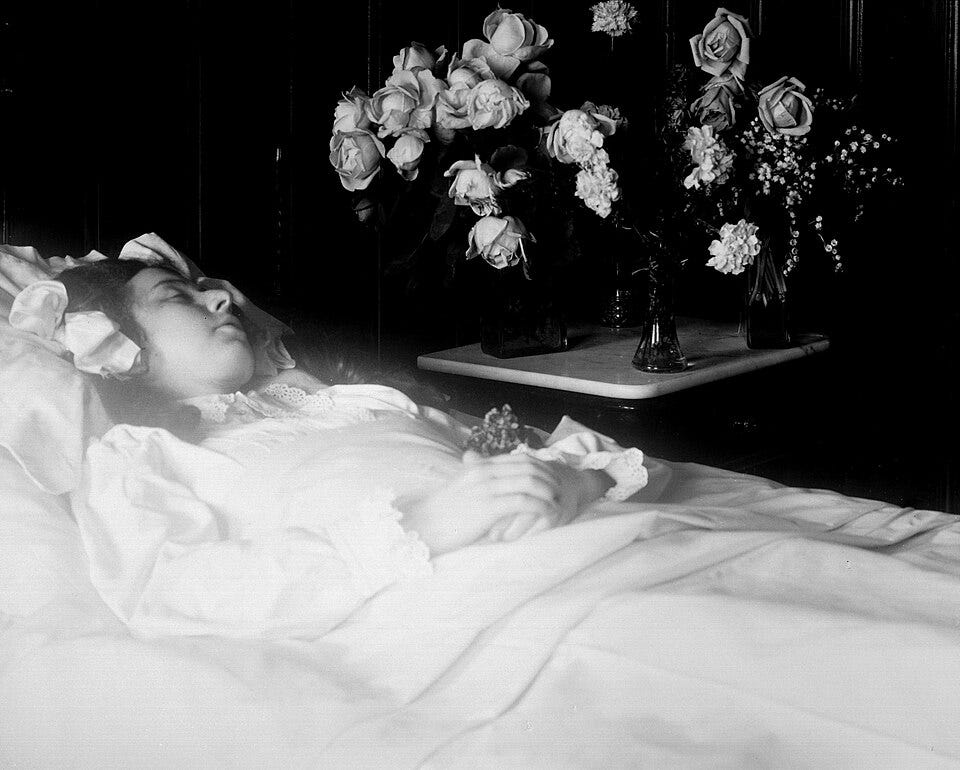
I also like the fact that mourning portraiture became something close to a common rite with photography, allowing more people, from different backgrounds, to own a farewell image and to heal through it. A technological shift in one of our most human rituals.
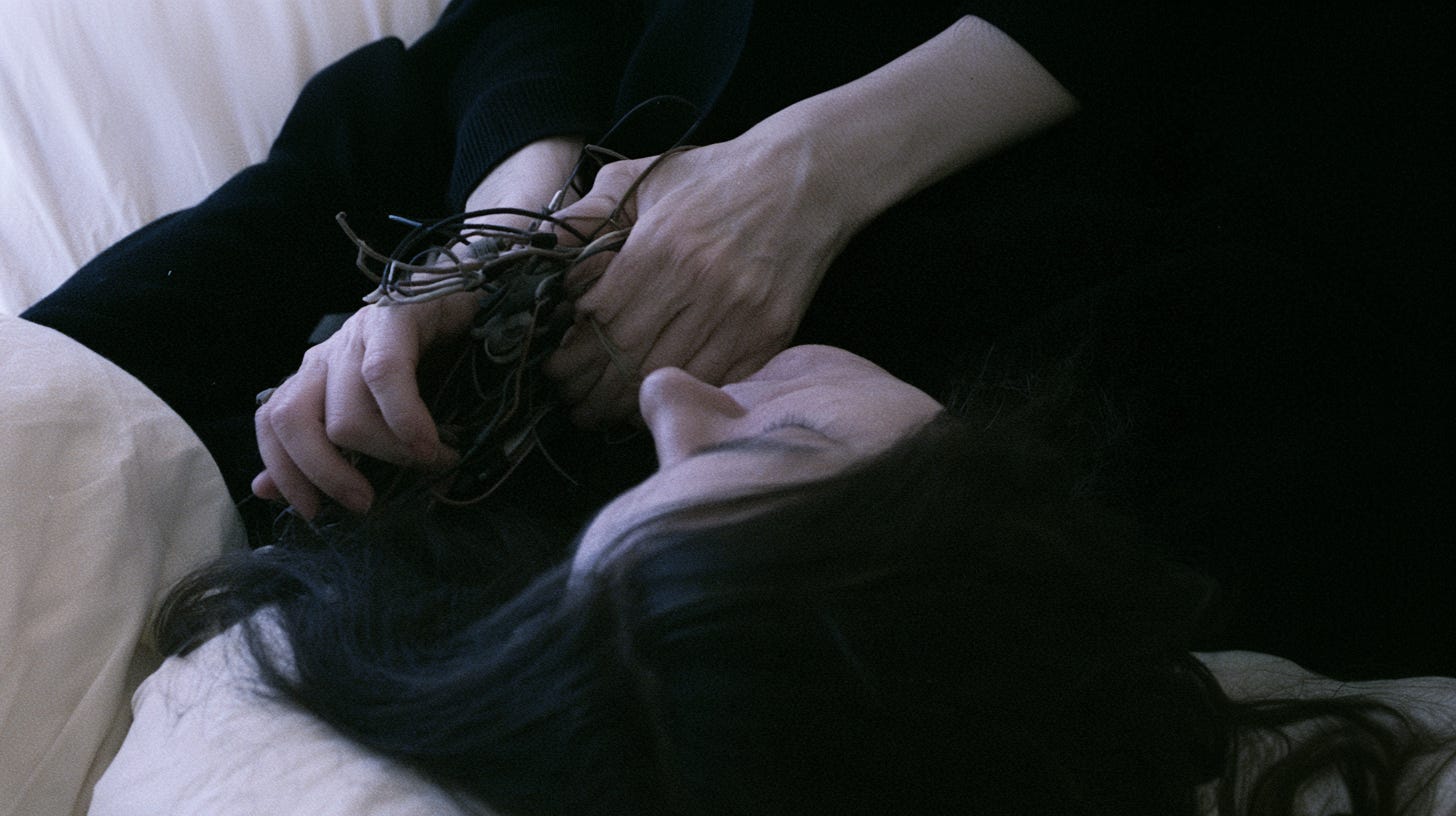
In the collection released alongside the film, a few pieces are arranged in the style of nineteenth-century mourning portraits. One of them is called “Loneliness” (solemnly collected by Unknown Collector): Maïa on her bed, in black clothes, still holding the wires she’s just cut, enduring silence and solitude for the first time. To me, she feels almost like a wounded animal peacefully enduring the absence.
As said, Maïa destroys the robot, unplugs everything, breaks everything into fragments. She dehumanizes the humanoid literally, and I wanted a postmortem image for it too, even with its limbs dismantled and scattered, closer to a war postmortem than a peaceful one.
The film itself is scattered too, after all, assembled through multiple tools and models. A fragmented puzzle built from known and unknown data, the way a person tries to reconstruct what they can no longer fully remember. A unhuman monster.
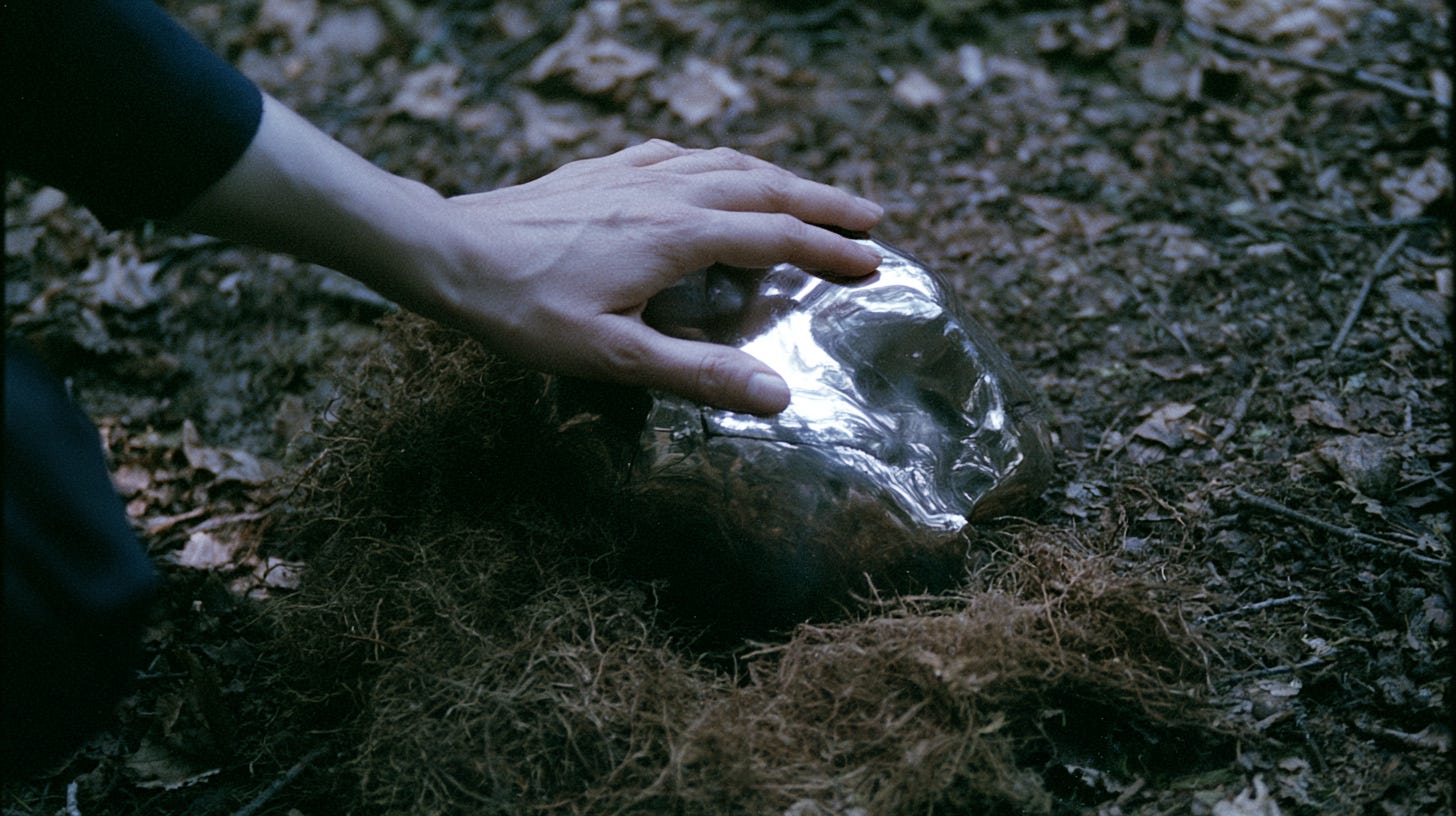
In the final scene, Maïa finally walks into the forest and finds a spot near the trees to lay the agent’s body down, respectfully. Not broken or dismantled this time. Placed reverently into a hole in the earth, almost like a pagan funeral. Its steel face, stripped of its fake human skin, looks up at the sky. The robot became a body to mourn this time, I think.
After enduring so much pain, violence, and confusion, I wanted Maïa to end the film with the freedom to use technology her way, without contracts, surveillance and obligation. She finally starts to reconcile with her grief by arranging herself a funeral for the robot’s body in the forest, the way she would for her daughter, if there had been a body. The only moment she allows herself to confuse the two, and to step into another phase of her long grief.
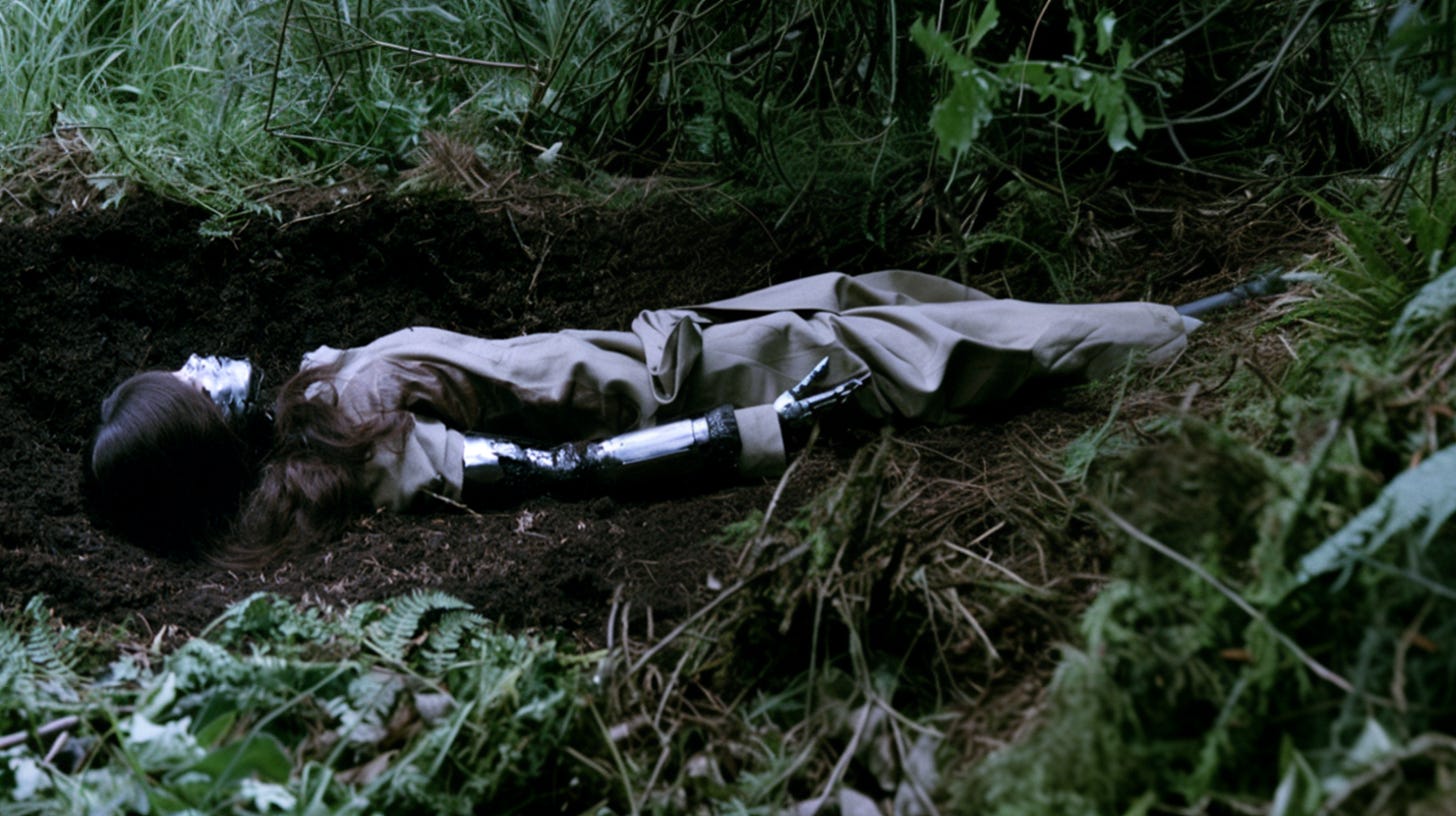
“Then when we die, we are, of course, unable to move; the body goes cold, and the face becomes pale. Therefore, our death can be regarded as a movement from the second peak (moving) to the bottom of the uncanny valley (still).”
Masahiro Mori, “The Uncanny Valley”
I want to thank my dear collectors who supported my work, and collected the first pieces of the collection: Unknown Collector, Yang Wong, Fantastic Planet, awHECK, Yuran Yakon.
I want to thank Anika, from The Second Guess, for making this release possible, and with whom I always have the honor of sharing my AI films and growing stories. I also want to thank Rome New Media Week for giving me the opportunity to exhibit the film at La Galleria delle Arti in Rome, in July 2026.
Thank you all for this 🖤
With care,
Marine