
About Clara
A post about AI therapy, failed stillness, and dissociative amnesia.

My last two posts were about my first AI-generated photo album I wasn’t there, and what it meant to me. Today I want to focus on my last artwork Clara, and share some thoughts and personal questions about AI care, memory and stillness. I hope you’ll enjoy reading it.
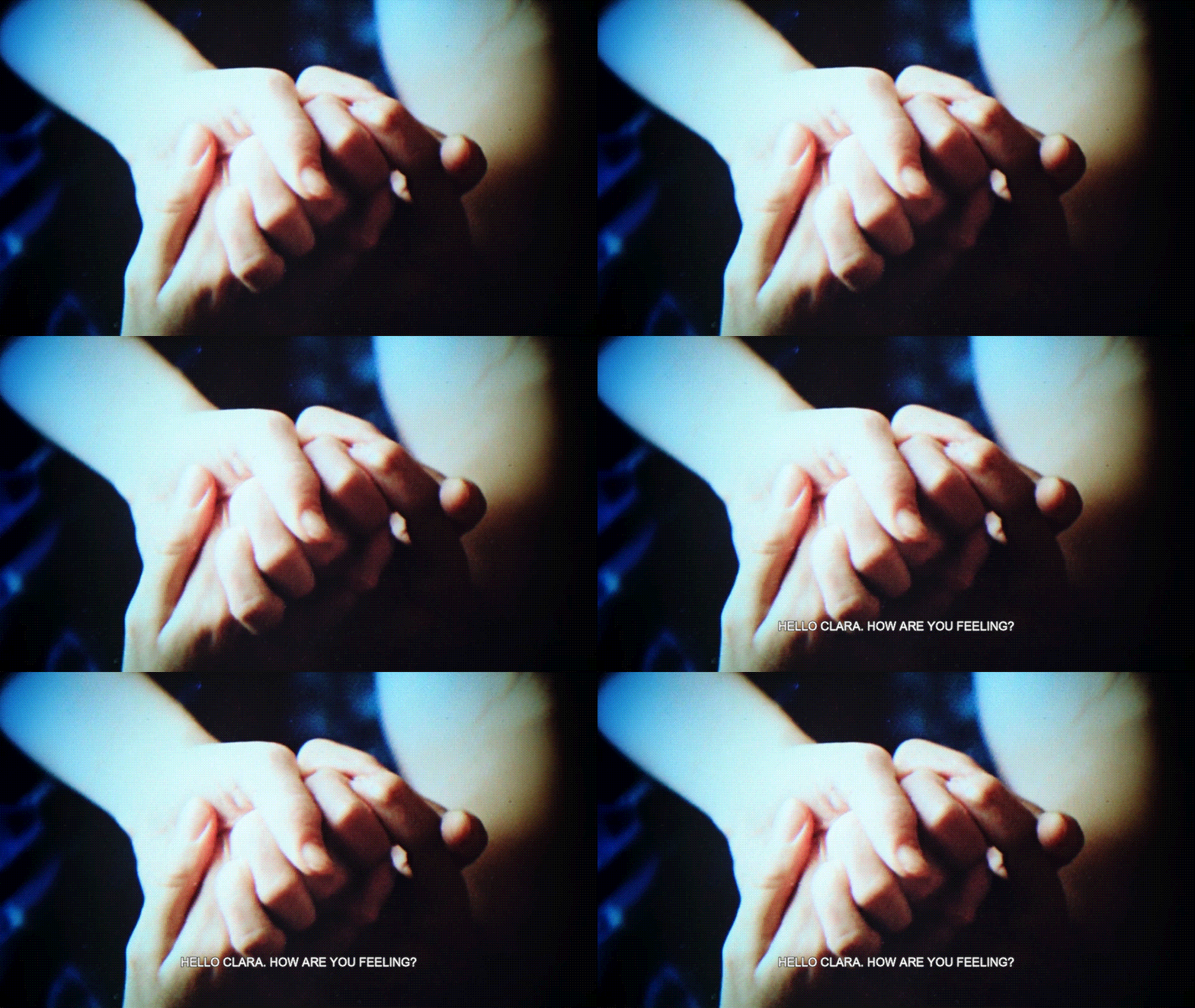
“Can you feel the gaps in your mind ?”
I think any work of art is connected to memory in some way. Because it’s always contemporary.
Britannica’s definition of human memory describes it as the capacity of the human mind to encode, store, and later retrieve past experiences, retrieval bringing stored information back into awareness. Yet, it doesn’t operate like a replay, but more as a recreated experience. Each time we retrieve a memory, we rather reassemble it. Its reconstruction is influenced by context, cues, or imagination. For this reason, past experiences can fade, distort, or on the contrary, become more vivid and resilient. It works like a reinterpretation for me.
In my latest artwork, Clara is a patient in a mental-health facility, showing signs of dissociative amnesia. She has missing parts of her memory that she cannot access, even though they still exist.
In an attempt to help her recover what happened, she undergoes daily sessions with an AI therapy assistant. A conversation unfolds, with the AI trying to make her feel safe and help her focus on her present feelings. The AI’s questions are recorded and displayed as subtitles.
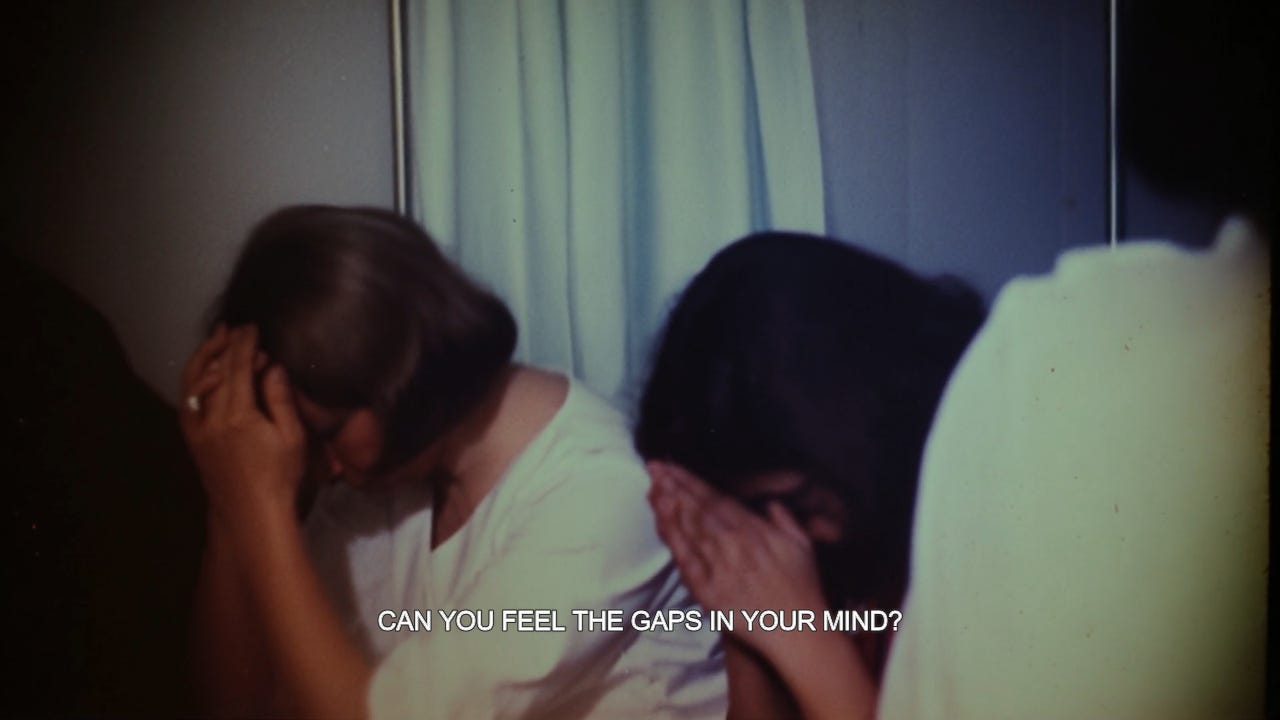
The MSD Manual defines dissociative amnesia as “a type of dissociative disorder that involves the inability to recall important personal information that is not consistent with normal forgetfulness. It is usually caused by trauma or stress. Diagnosis is based on standard psychiatric criteria after excluding other causes of amnesia. Treatment is psychotherapy, sometimes combined with hypnosis or medication-facilitated interviews… Treatment of more severe memory loss begins with creation of a safe and supportive environment. This measure alone frequently leads to gradual recovery of missing memories.”
In Clara’s condition, her memory remains intact, only inaccessible to conscious awareness, due to a trauma. What feels like absence is in fact protection from an overwhelming pain.
Their exchanges begin with small steps. For instance, she tries to physically sense the presence of the gaps and describe feelings tied to the present moment or to visits from loved ones. Scattered details about food and wine are mentioned, fragments surfacing in unexpected ways. There are no clear answers, yet.
While doing some research about it, I encountered testimonies describing the same symptoms. Memories seem displaced, “lost in time”, hidden from immediate awareness so that the individual can endure what might otherwise be unbearable. This protective mechanism allows a person to keep functioning even when faced with traumatic experiences that I will not describe here.
Clara needs to feel how present is the gap in her memory and dig into it carefully, step by step, if she wants to remember what happened or what she did in those last few months.
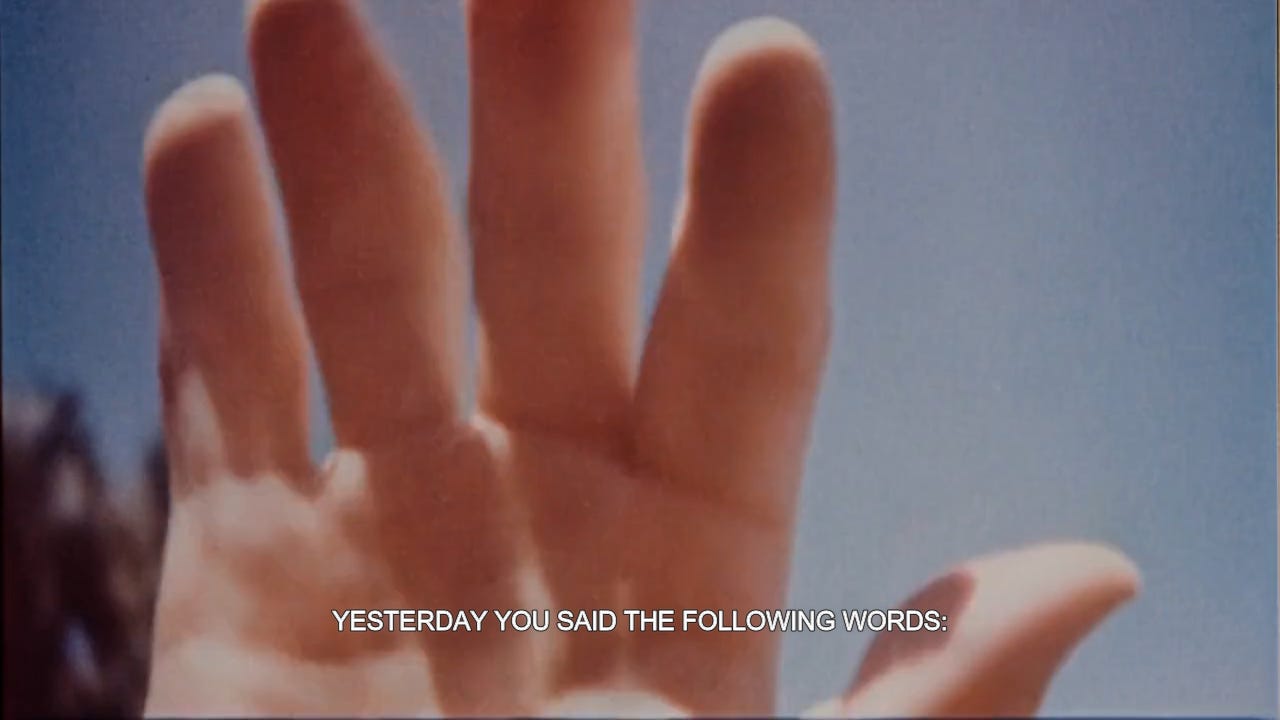
“The ORDINARY RESPONSE TO ATROCITIES is to banish them from consciousness. Certain violations of the social compact are too terrible to utter aloud: this is the meaning of the word unspeakable.”
Judith Lewis Herman, Trauma and Recovery: The Aftermath of Violence - From Domestic Abuse to Political Terror
From another perspective, it was also important to note that forgetting does not belong to individuals alone.
Whole families, communities, and nations engage in their own varieties of silence, repression, and mass denial. These pasts are not eliminated but pushed aside, silenced in order to shield the group from shame and conflict. Among other works, I think Cultural Trauma and Collective Identity (Alexander, Eyerman, Giesen, Smelser, & Sztompka, 2004) was a good help for me in understanding this.
I chose to leave Clara’s story unresolved. I think it was to preserve a space in which others could recognize their own experiences in this kind of “forgetting”, me included. I was searching for that space myself, a refuge where my own fragments might also find room to breathe. Clara could be a friend, a neighbor, a sister… And her dissociation might not be just hers.
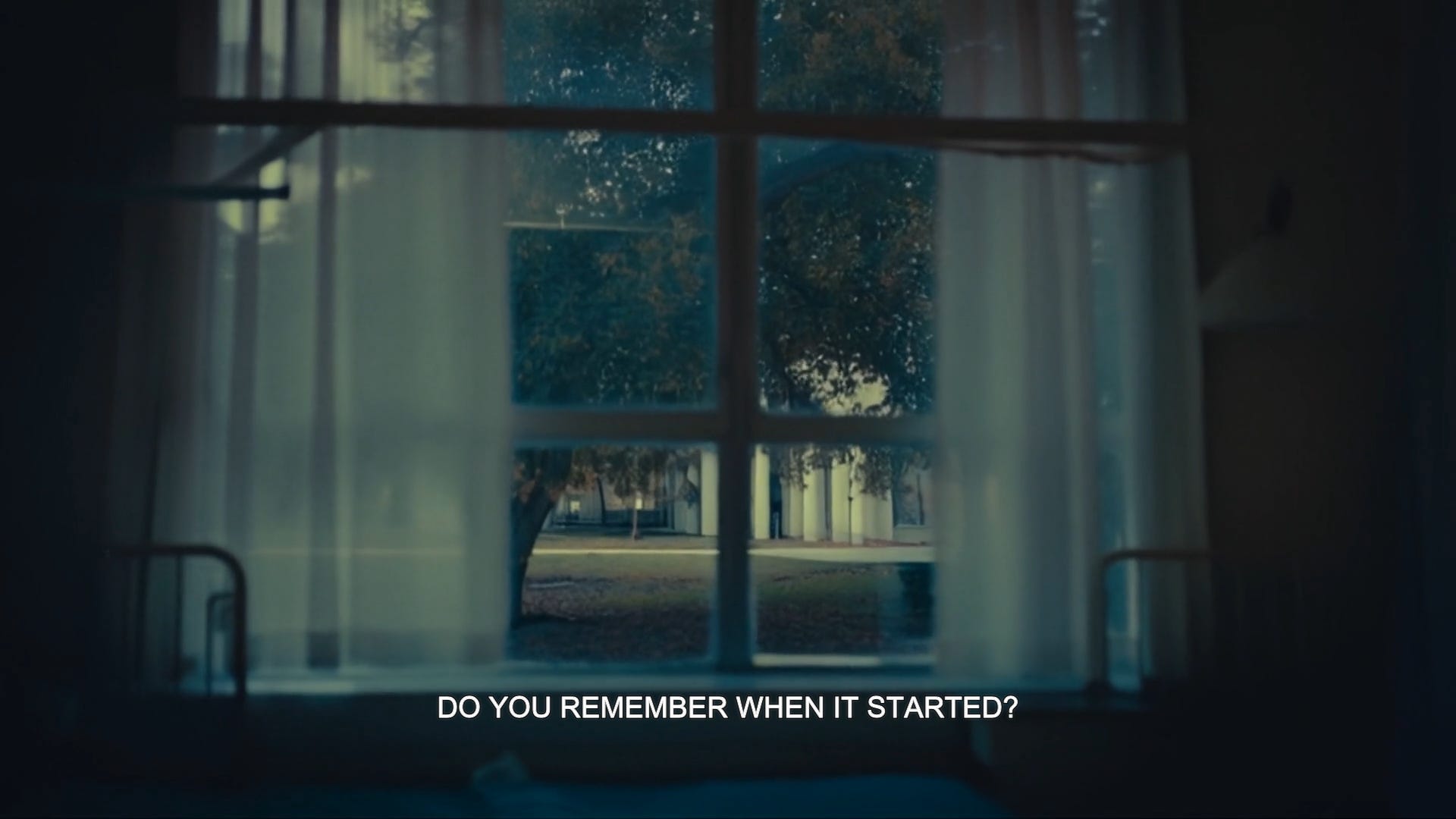
“You can hold my hand”
During Clara’s therapy session, the film drifts into the exploration of a facility where patients, nurses, and AI assistants work together.
The AI assistants, sometimes embodied in artificial female figures, are engaging in the slow process of healing with the patients. Altogether, humans and AI experiment with healing exercises, practice forms of empathy and proximity, and cultivate connections.
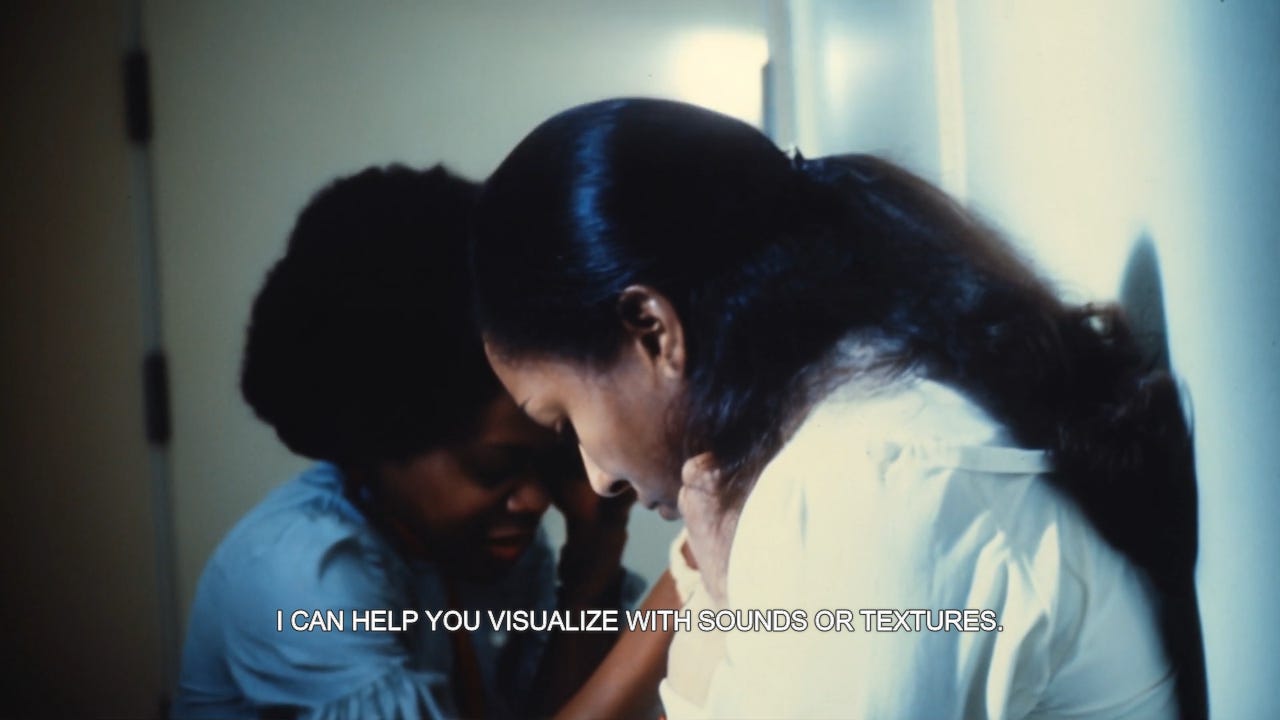
Here, I wanted to imagine a place where AI is collaborating with human health workers and patients: performing acts of care, simulating empathy, and safeguarding sensitive data. The sequences might recall a sort of medical training video archive, with humans and AI cultivating a temporary embrace, attending to needs often unmet in clinical environments: sustained attention, presence without judgment, and the preservation of dignity.
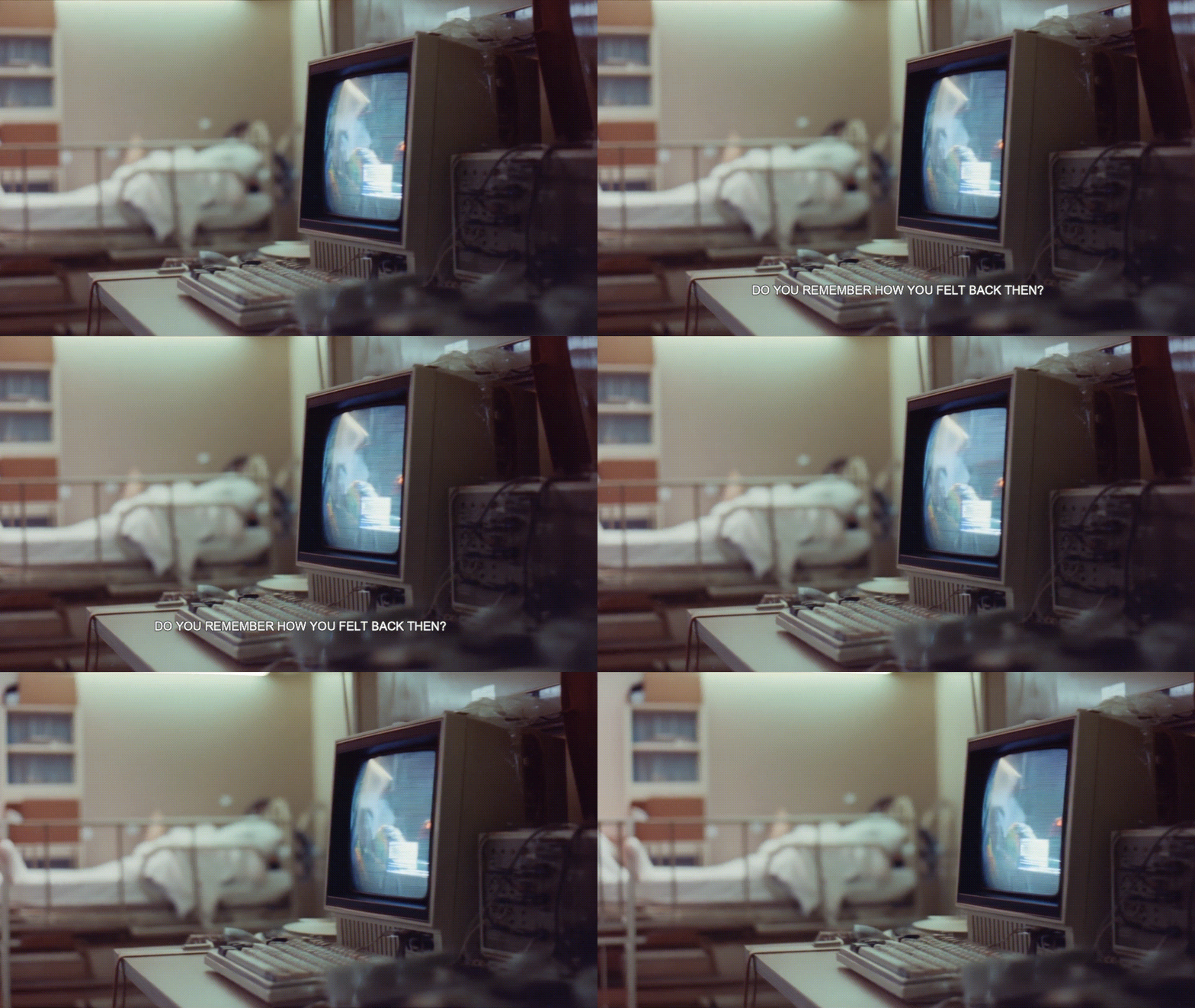
Some research has already pointed in this direction. In a recent clinical trial at Dartmouth, an AI therapy chatbot showed measurable mental health benefits for patients, who described it as trustworthy and communicative in ways surprisingly close to human interaction (Dartmouth, 2025). Similarly, Sharma et al. (2023) have shown how human–AI collaboration can enable more empathic conversations, not by replacing human presence but by amplifying it.
The film is not intended as a model to be followed. In the real world, and in my opinion, the priority would be to hire more human nurses before turning to other technologies. I also understand the fear of being cared for by an AI. That fear may have been nourished by science fiction for decades, but also by legitimate concern over who controls the technology. For me, the question remains: if we could imagine a space where AI caregivers are trained around principles of transparency, diversity, and accountability, what forms of healing could become possible in order to preserve our human mental well-being?
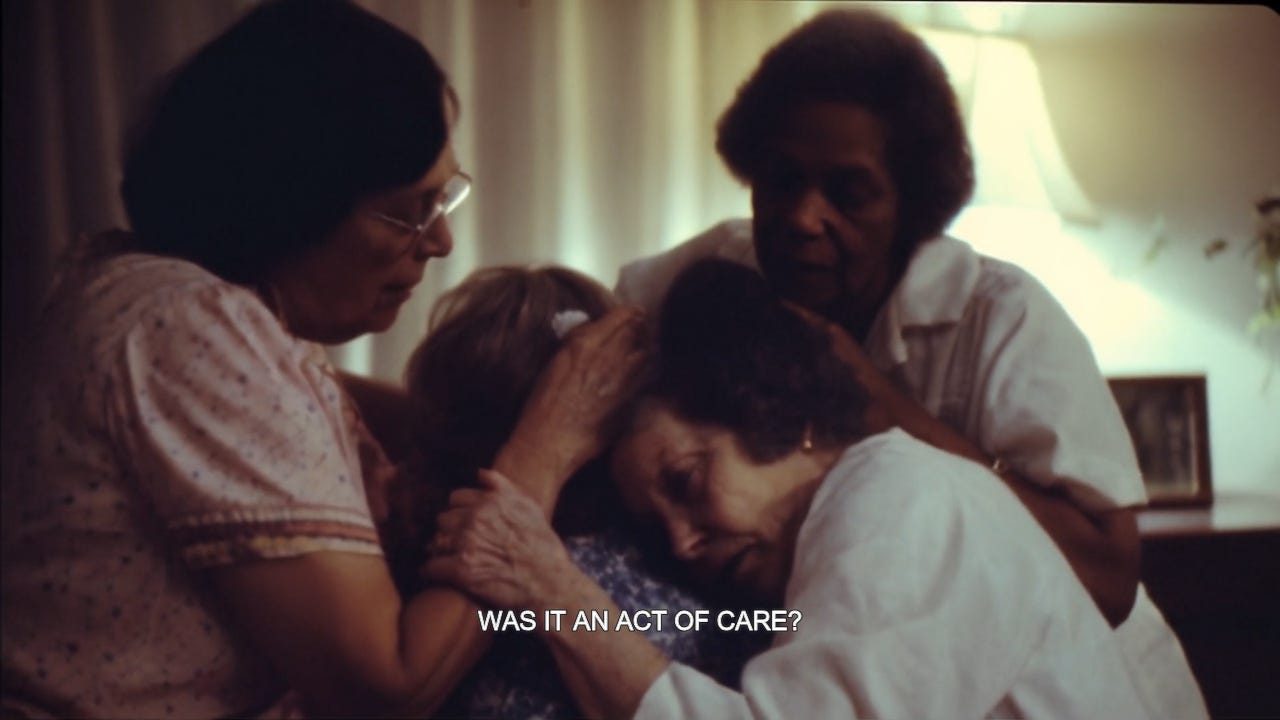
I can only imagine, but I cannot pretend to answer these questions. What I can say is that, for me, the real unease is not with AI tools themselves, but with the human systems that direct them. AI may feel like a stranger, but humans can’t always be powerful or trustworthy either, whether they are sincere in their intentions or not.
“We don’t have to find out today”
I used the phrase “lost in time” at the beginning of the post. I first came across it in a BBC article on dissociative amnesia, and it felt like the right expression to capture not only Clara’s situation, but also the film itself.

Nothing moves here. A kind of stillness seems to have settled over the entire facility. Everyone is suspended in a collective pause. It feels like they are all searching for Clara’s missing memories as though they were their own. “lost in time,” both the patients and the film fragments share an almost static, collective moment of uncertainty.
Generated with Midjourney and Krea, the film is composed of AI-generated sequences that mimic handheld cinematography, images that feel as though they were captured without a stabilizer, guided instead by the natural movement of a human body. Each frame carries involuntary shifts that reveal the presence of someone behind the camera.
To me, these shots are almost striving for stillness, but continually disrupted by small, accidental tremors. Even when they are intentionally created, these imperfections feel like an honest form of looking: intimate, searching, deeply human.
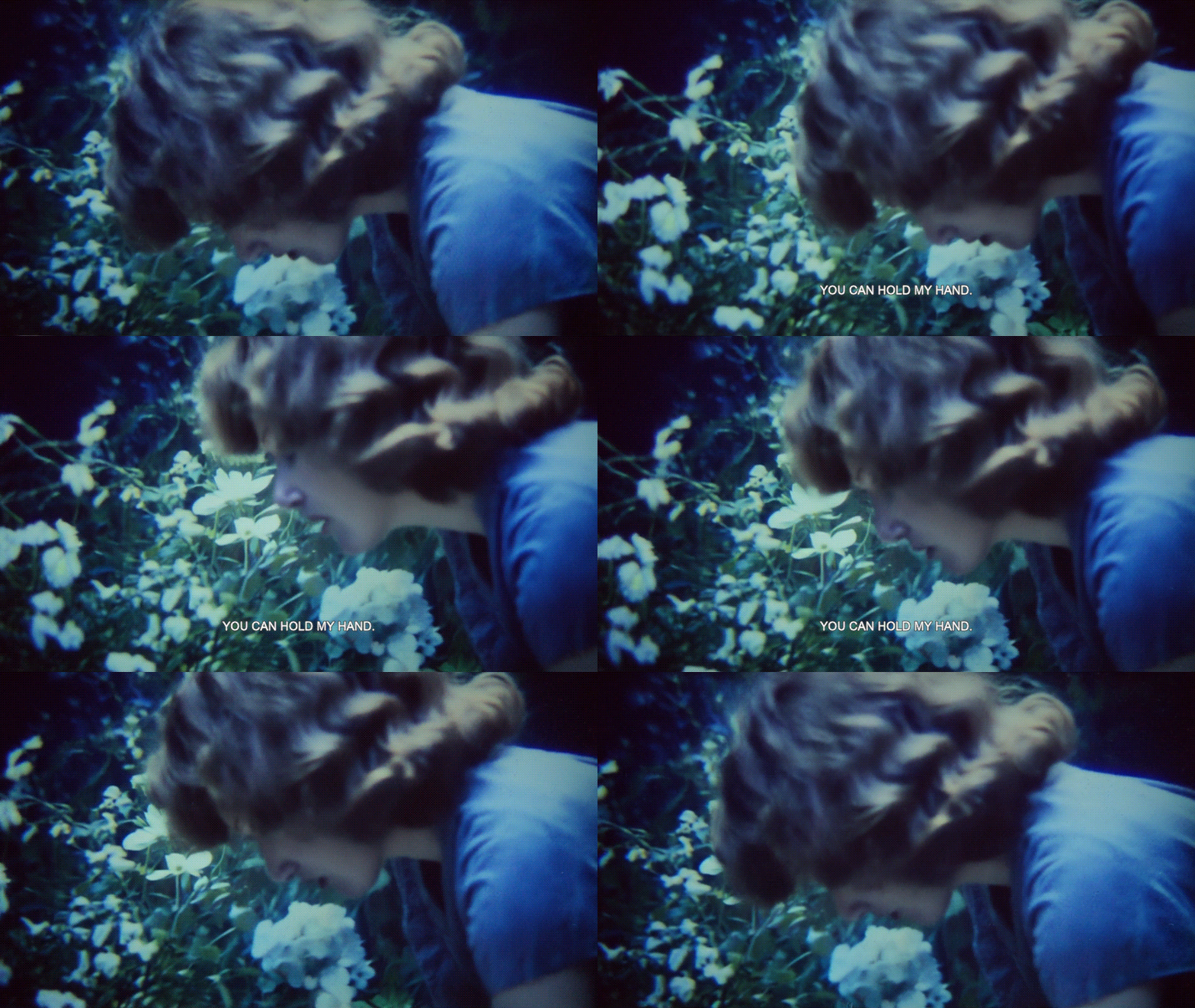
In moments shaped by uncertainty and doubt, a perfectly fixed or “objective” image would fail to capture what is truly happening. The camera’s instability makes time visible; it holds hesitation, presence, and the open-ended nature of lived experience within each frame.
By embracing this kind of awkward stillness, I wanted to feel part of the space, among the nurses and the patients. I wanted to approach my own story without the pressure of dramatic revelations or premature conclusions. For me, these fragments are a way of reclaiming time and resisting narrative urgency.
This approach gives me a physical sensation of pause, of inhabiting uncertainty, of existing within a stretch of time that is no longer rushing forward but waiting, patiently, to be understood.
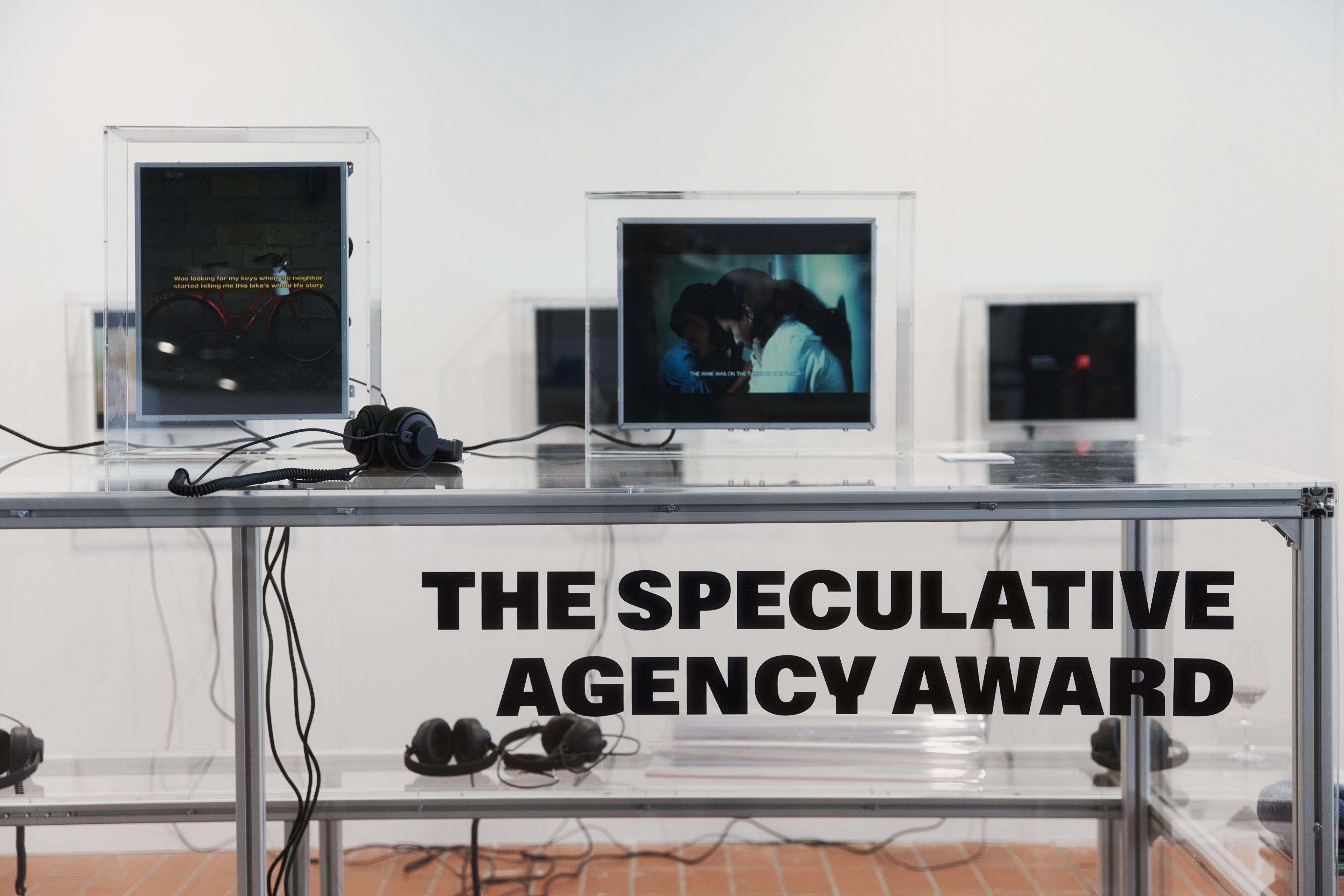
I would like to thank Anika Meier for selecting this film for the Speculative Agencies Award, and Cifra for making the open call and the exhibition possible.
The film was presented at POSITION Berlin Art Fair, on September 11 to 14, 2025, with Cifra.
It’s truly an honor for me to have seen my work at this exhibition.
With care,
Marine